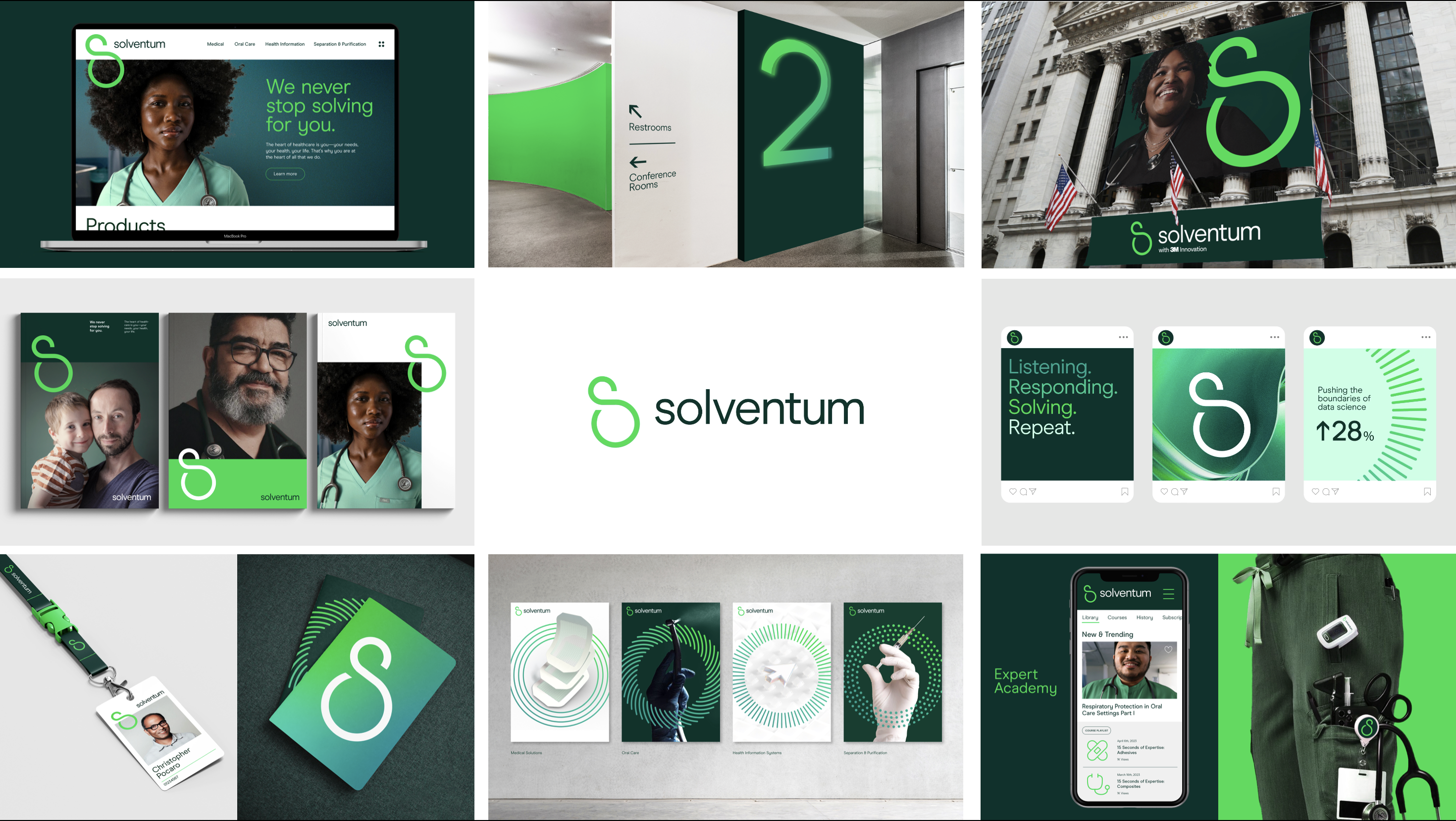
3M Health Care was spinning off into an independent company. They needed more than a new name — they needed an entirely new brand ecosystem, from digital presence to physical experience, built on a strategic foundation that could scale well beyond our engagement.
The timeline was aggressive. The brand would launch publicly in just over a year, and every touchpoint had to be ready or in motion by then.
I was brought on as Experience Director to lead the research that would underpin the entire effort, then to direct the UX team through execution across multiple workstreams.
The rest of this case study is password-protected.
Before designing anything, I needed to understand the organization: its people, its customers, its tensions. I designed and led a global research program across two tracks.
Two research tracks. One strategic foundation — informing every decision from brand identity to digital experience to physical space.
Conversations ranged from the CMO to channel marketing managers internally, and from chief medical officers to directors of corporate accounts externally. The goal was to map not just what people thought, but where assumptions diverged.
The findings converged into a set of personas that captured both internal and external audiences. These became the shared reference point for every strategic decision that followed.
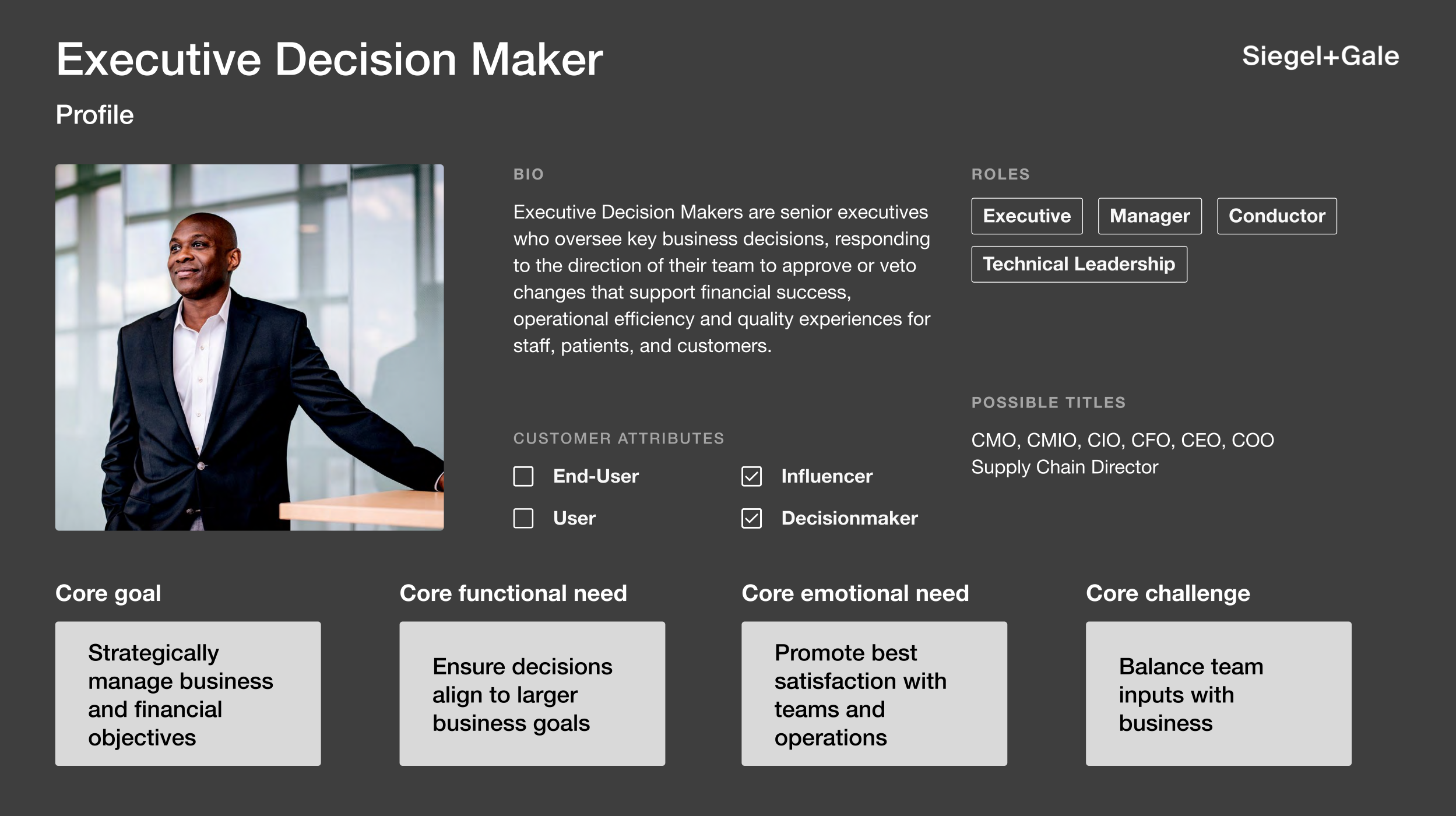
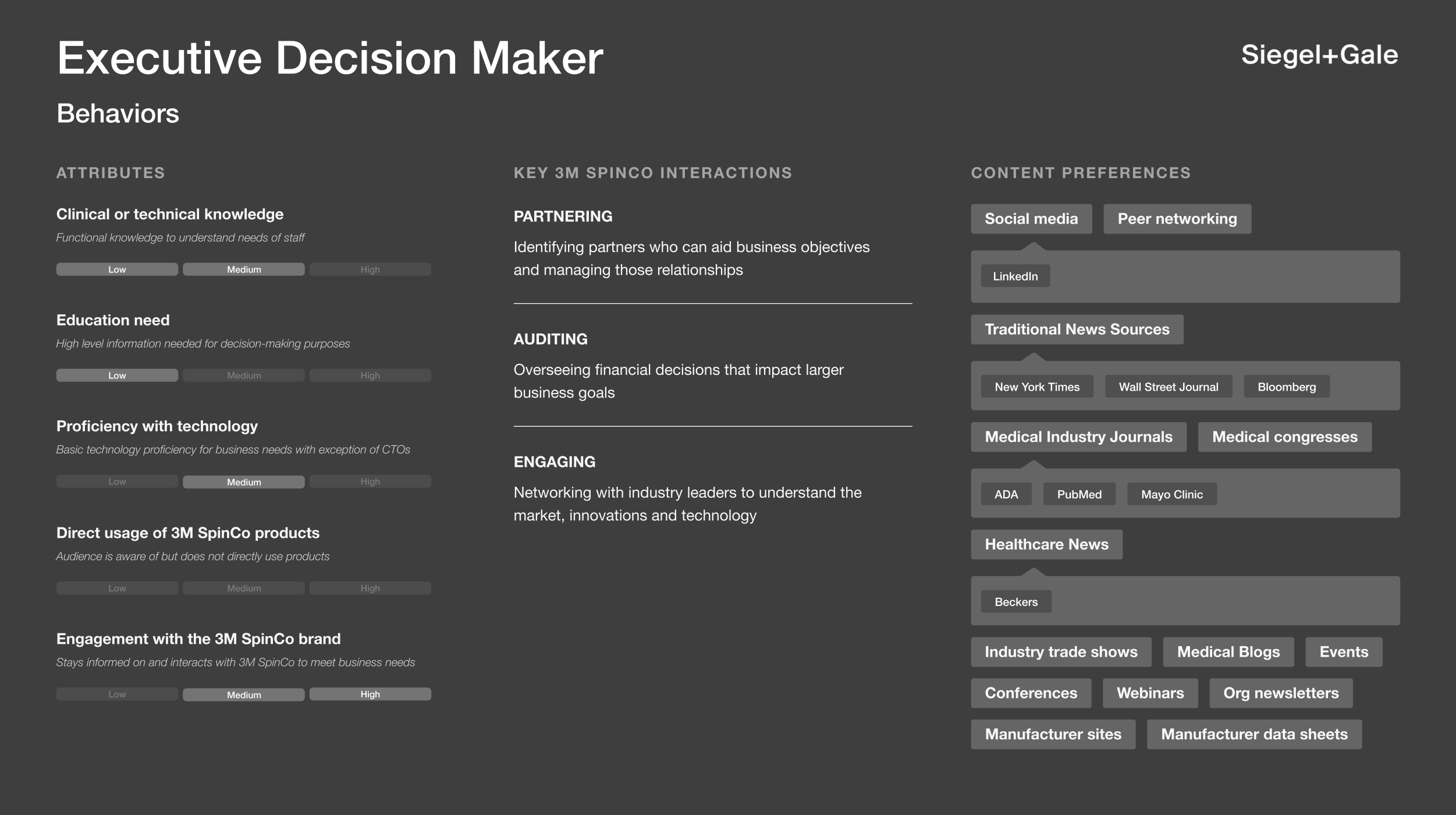
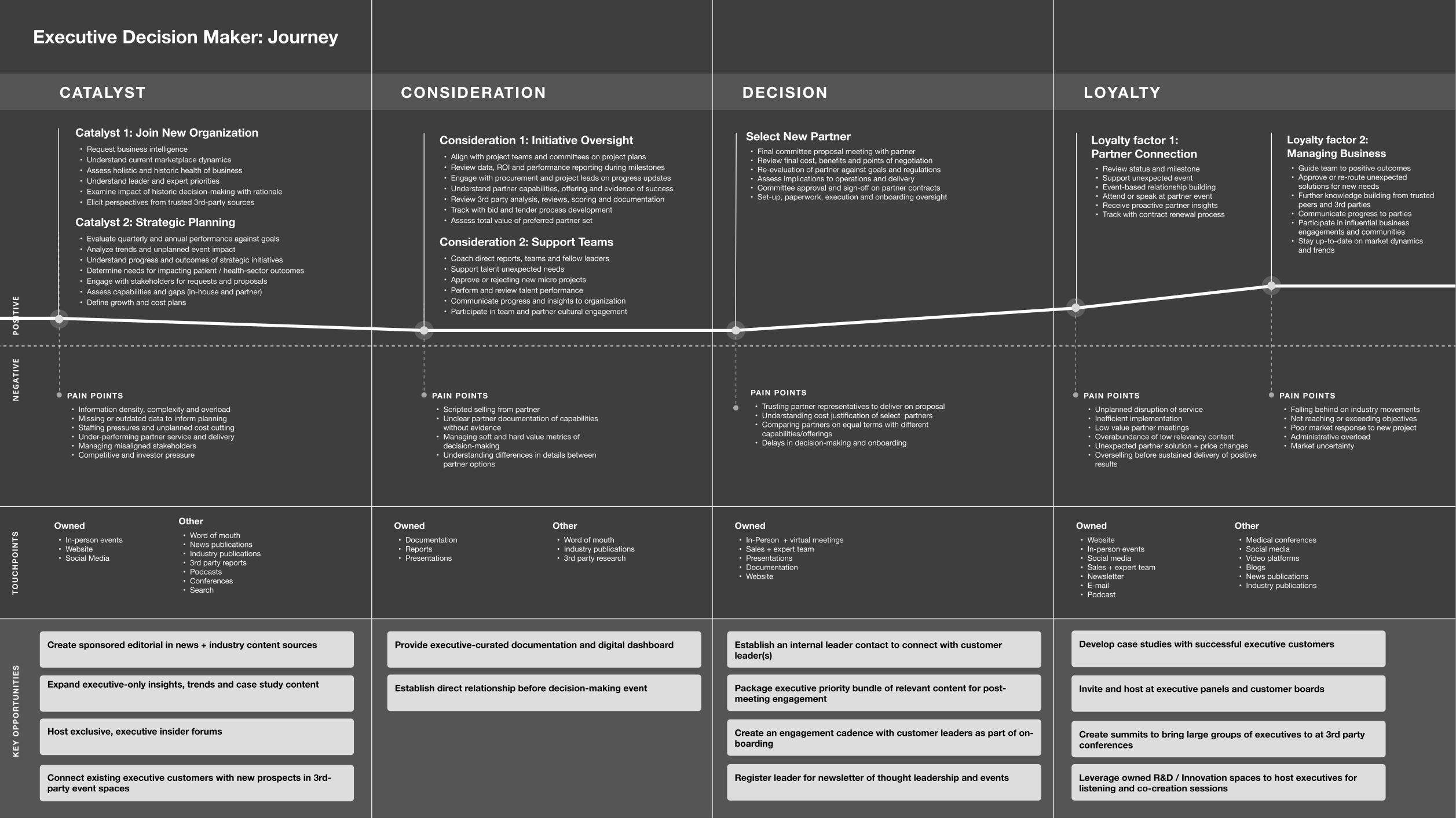
One of the most consequential findings: employees and customers alike associated 3M with industrial materials, not healthcare. The brand equity was real, but it wasn’t transferable. 3M’s industrial materials division had also had some recent legal controversy, so there was even more incentive to move away from that brand.
This fed directly into the strategy team’s brand architecture. The recommendation was clear: a net-new identity would give Solventum the freedom to position itself as a healthcare-first company. The brand design team then created the logo and visual identity, along with the design system that my team would later use as the foundation for the website.
That identity became Solventum. Their mission — enabling better, smarter, safer healthcare to improve lives — became the grounding principle for everything we built.
The research and audit surfaced two core challenges: the depth and breadth of content made it difficult for audiences to find what they needed, and the existing web presence failed to communicate purpose. I synthesized these into three strategic territories and then facilitated a workshop to pressure-test each territory. The goal wasn’t to pick one, but to identify which elements resonated and what was realistic given launch constraints.
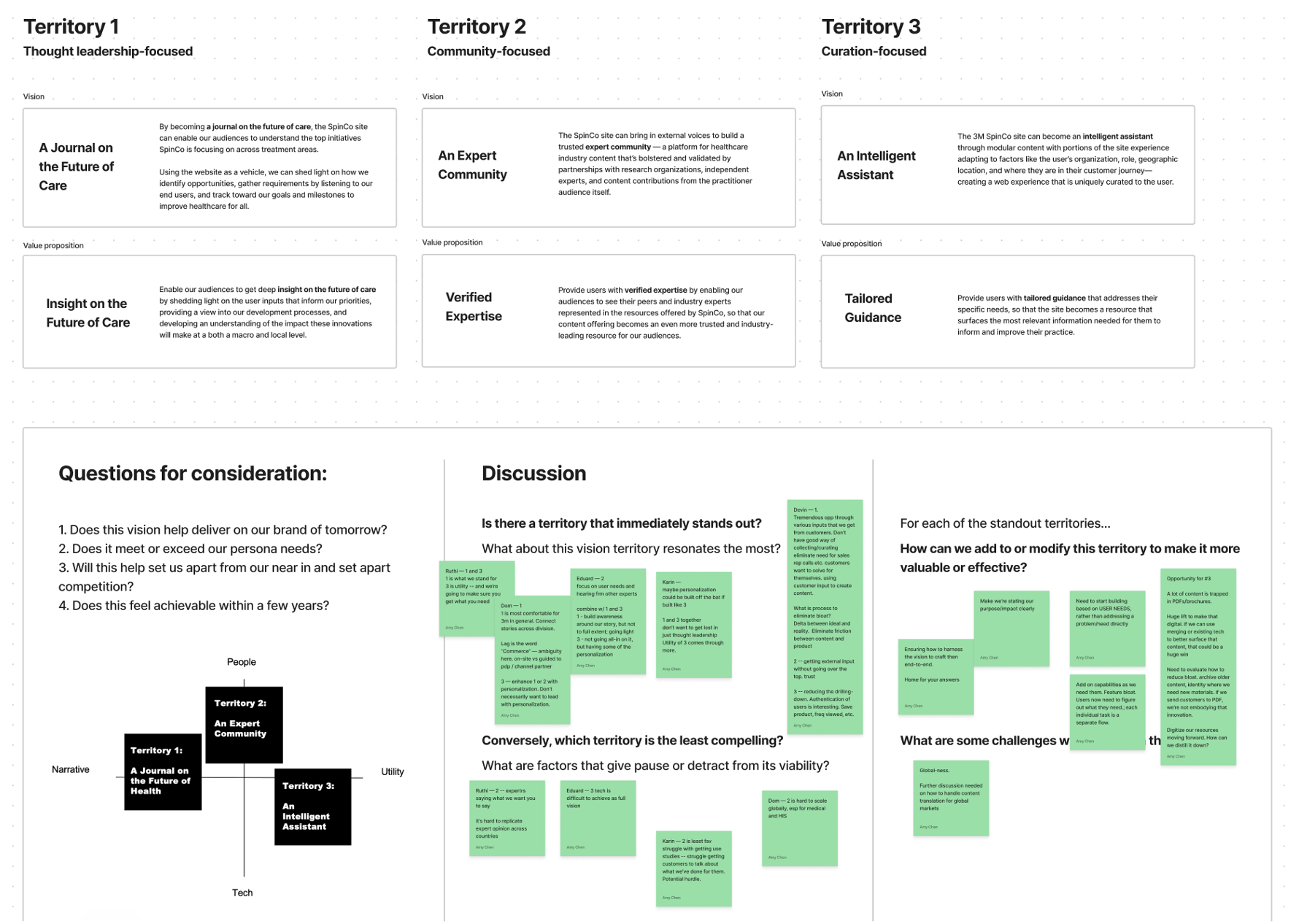
Territory 3, An Intelligent Assistant, became the foundation, but it absorbed key qualities from the other two. The editorial storytelling from Territory 1 and the integrated content approach from Territory 2 were carried forward, making the final direction richer than any single territory on its own.
From there, I developed the brand experience strategy: a vision and three experience principles that would govern every design and content decision going forward.
This framework became the backbone of the website, the brand center, and every digital deliverable that followed.
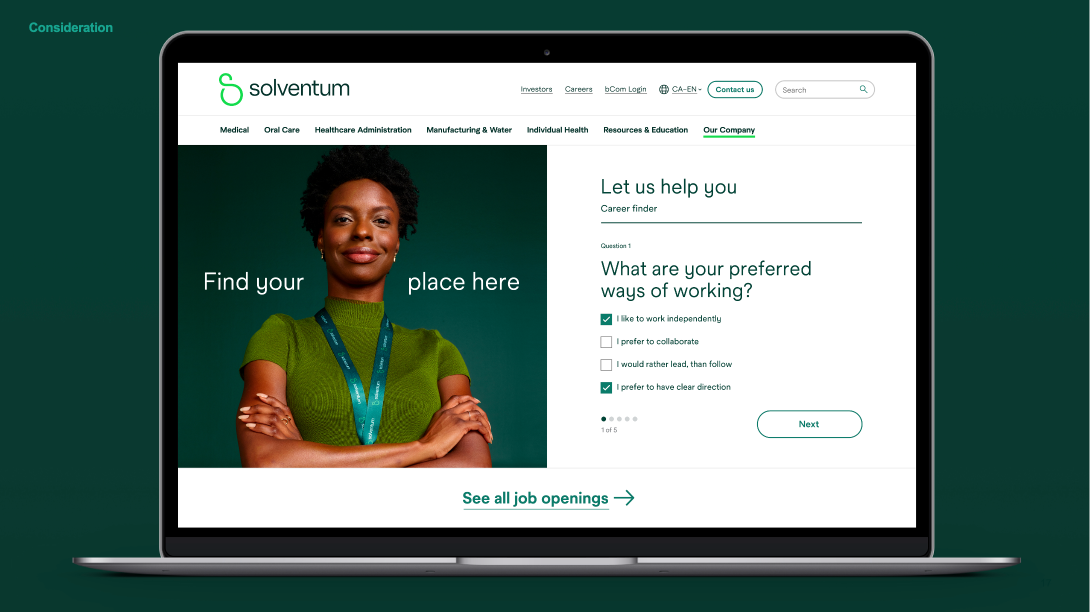
The website was the most urgent deliverable. Solventum needed a public-facing digital presence ready for their April 2024 launch, and their existing 3M.com presence had significant UX issues and an organizational structure that didn’t map to their new identity.
Experience Strategy
Before the site could be designed, it needed a strategic foundation. The experience strategy phase covered the full arc: auditing what existed, identifying organizational opportunities, structuring the site architecture, and planning how content and development would run in parallel.
Audit
The research scope included an audit of the current 3M.com experience and a competitive landscape review. The audit evaluated usability, accessibility, and audience impact — both the features available and the content strategy behind them — to identify where the new site had the most ground to gain. I evaluated 13 competitors across experience, design, and content, along with One Medical as an out-of-category reference. Even the strongest players had gaps. No one was excelling across all three dimensions.
| Experience | Design | Content | Overall | |
|---|---|---|---|---|
| Sartorius | ||||
| Medtronic | ||||
| Mölnycke | ||||
| Stryker | ||||
| BD |
3M.com Audit
Since we were building from scratch, the audit focused less on fixing what existed than on knowing what to avoid and what to carry forward.
Decrease complexity. Increase transparency of resources, content, + user flows.
The throughline across both: decrease complexity, increase transparency. Every architectural and content decision on the new site would be measured against that standard.
Information Architecture
Three structural approaches were on the table: product category-first (the inherited 3M model), brand architecture-based (organizing by audience type, such as consumers vs. providers), and audience-first. Both the brand strategy and UX best practices pointed to the same answer. An audience-first structure would align with how Solventum’s customers actually think about their needs — and with the brand’s commitment to being a personalized, problem-solving platform. That approach was recommended and selected.
Sitemap and Prioritization
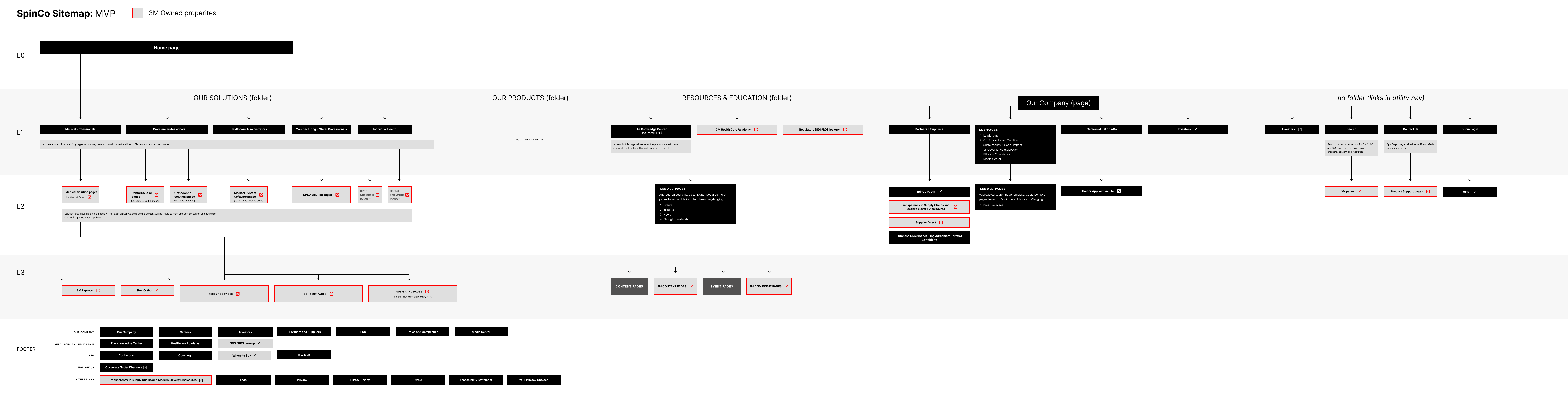
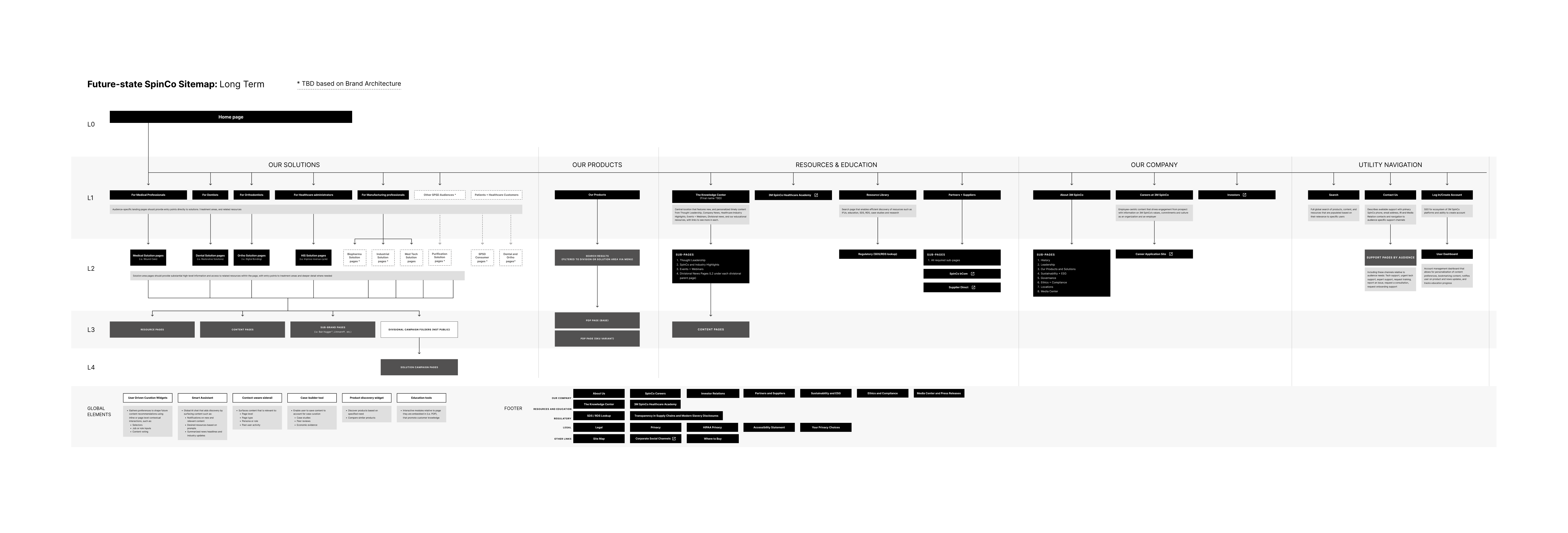
I developed two versions of the sitemap: an MVP scoped for the April 2024 launch, and a long-term version to serve as the north star. Having both in hand gave the client a near-term roadmap and a clear picture of where the site was headed, without conflating the two.
Content Migration Strategy
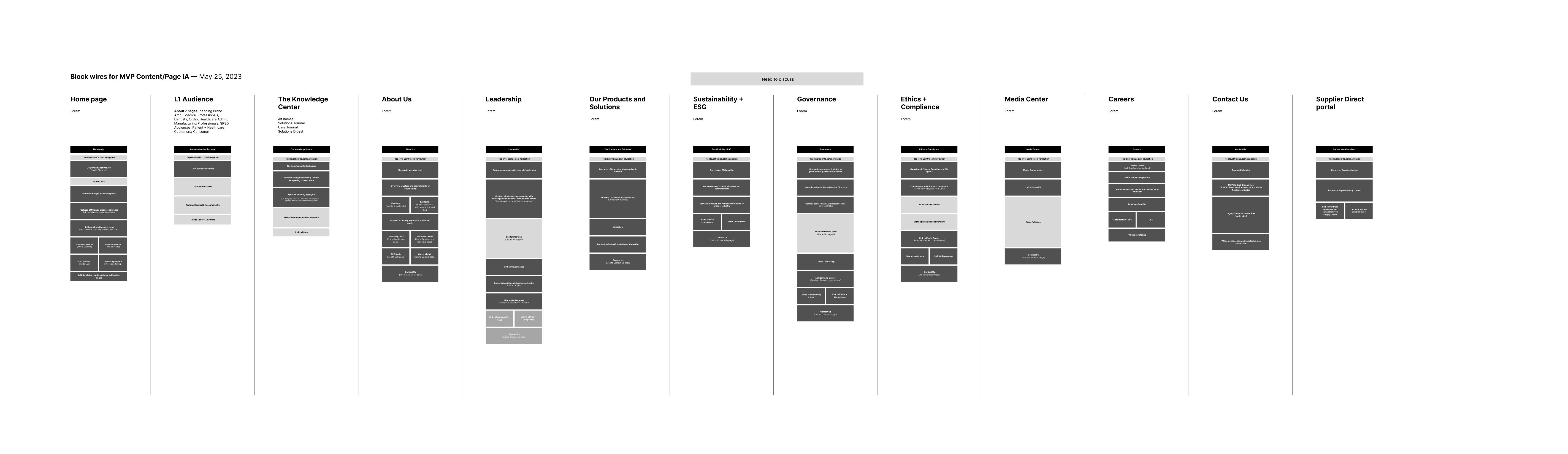
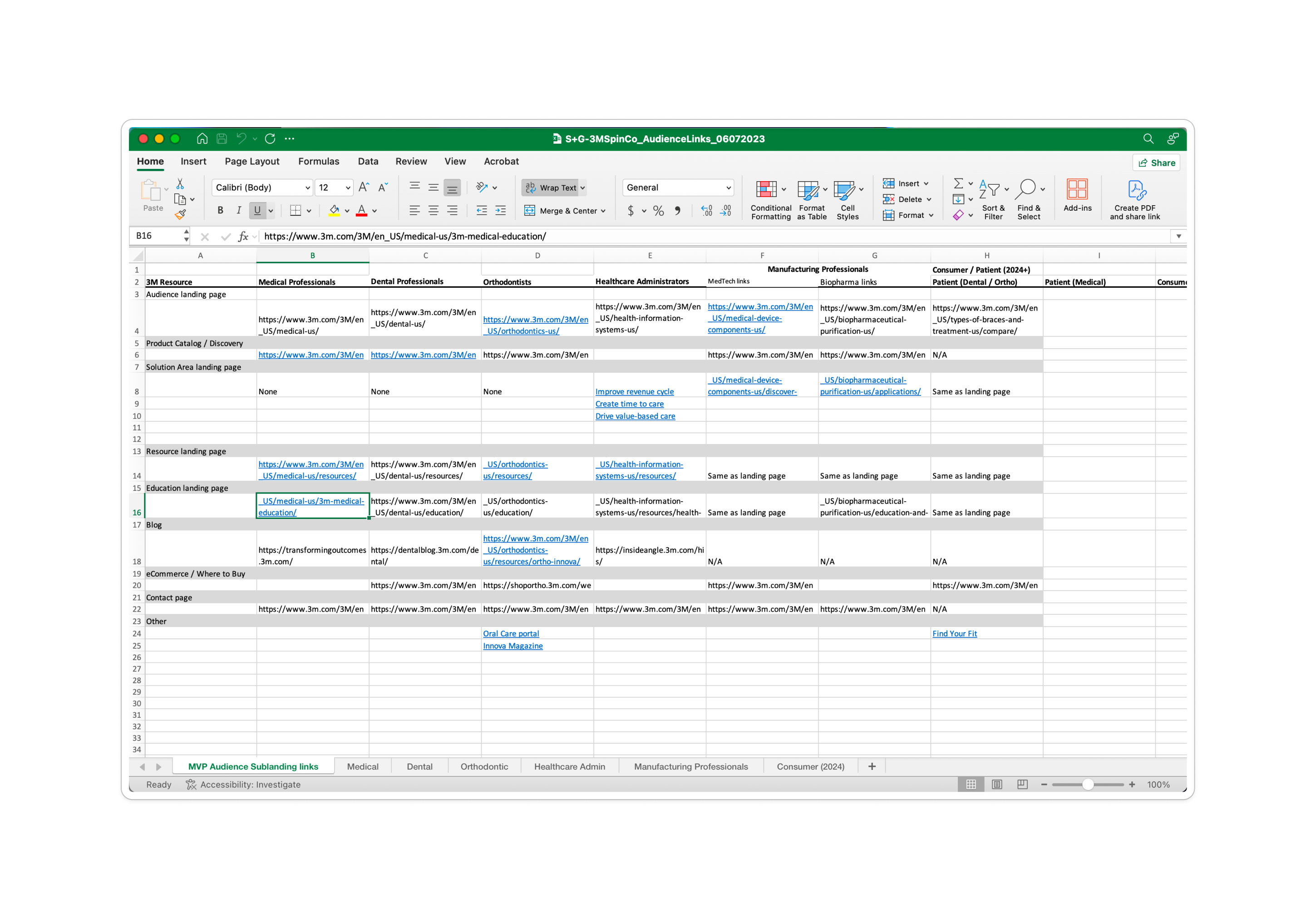
With a compressed timeline, content migration and content development couldn’t wait for design to finish. I built a framework to parallel-path both workstreams alongside UX and development — establishing clear ownership, sequencing, and dependencies so nothing got stranded at handoff. Block wireframes established the content model; a migration tracker kept both workstreams accountable.
UX Design
Page-level Direction
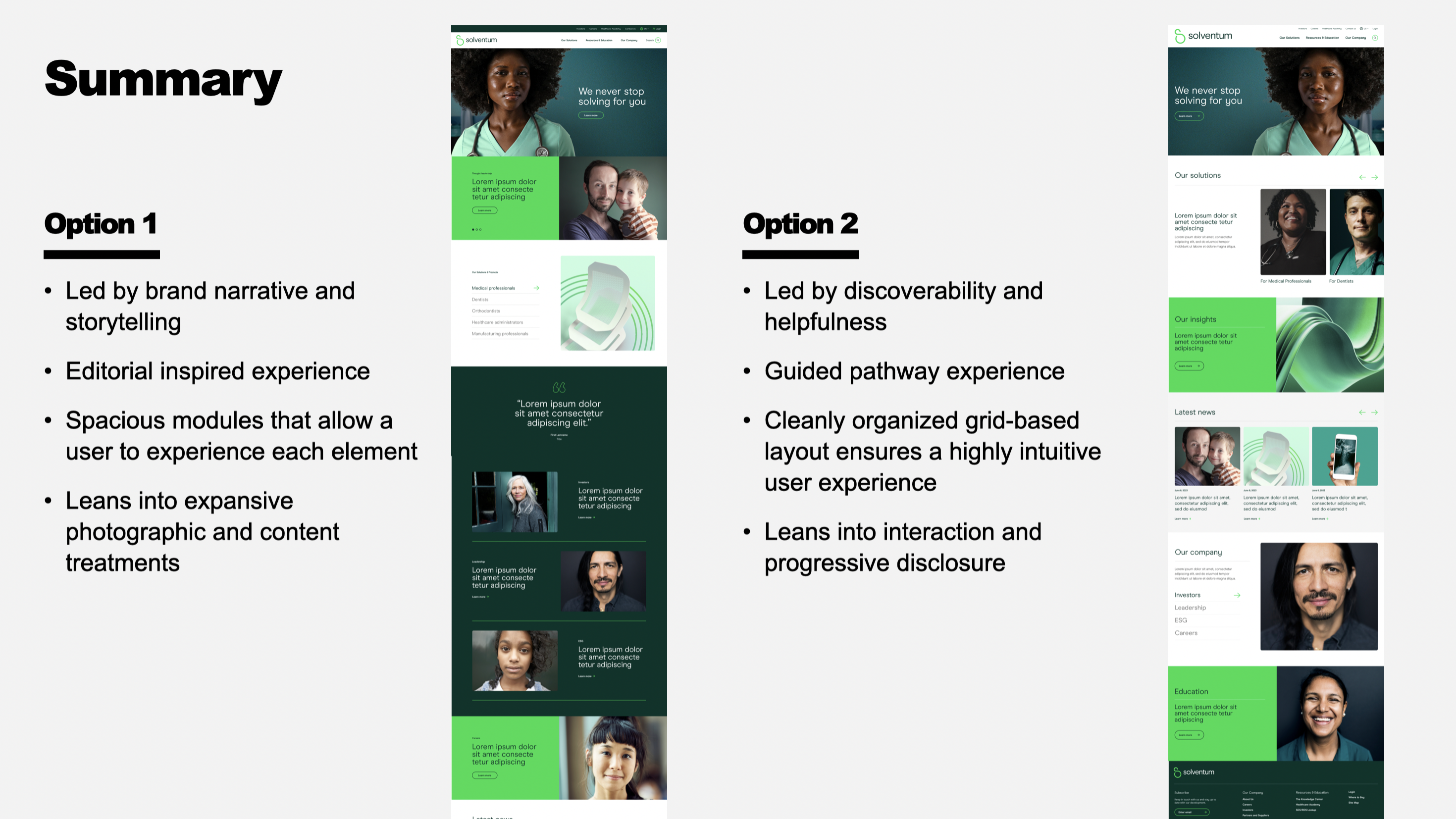
Two UX directions were presented for the core page experience. The first was storytelling-focused: editorial, spacious, designed to immerse. The second was discoverability-focused: intuitive, organized, built to help users find and act. The recommendation was the latter — it aligned directly with the selected site vision of a personalized, problem-solving platform. But because Solventum was launching a new brand with a story worth telling, Option 1 was presented as a temperature check on that decision. The client confirmed the recommendation.
Design Development
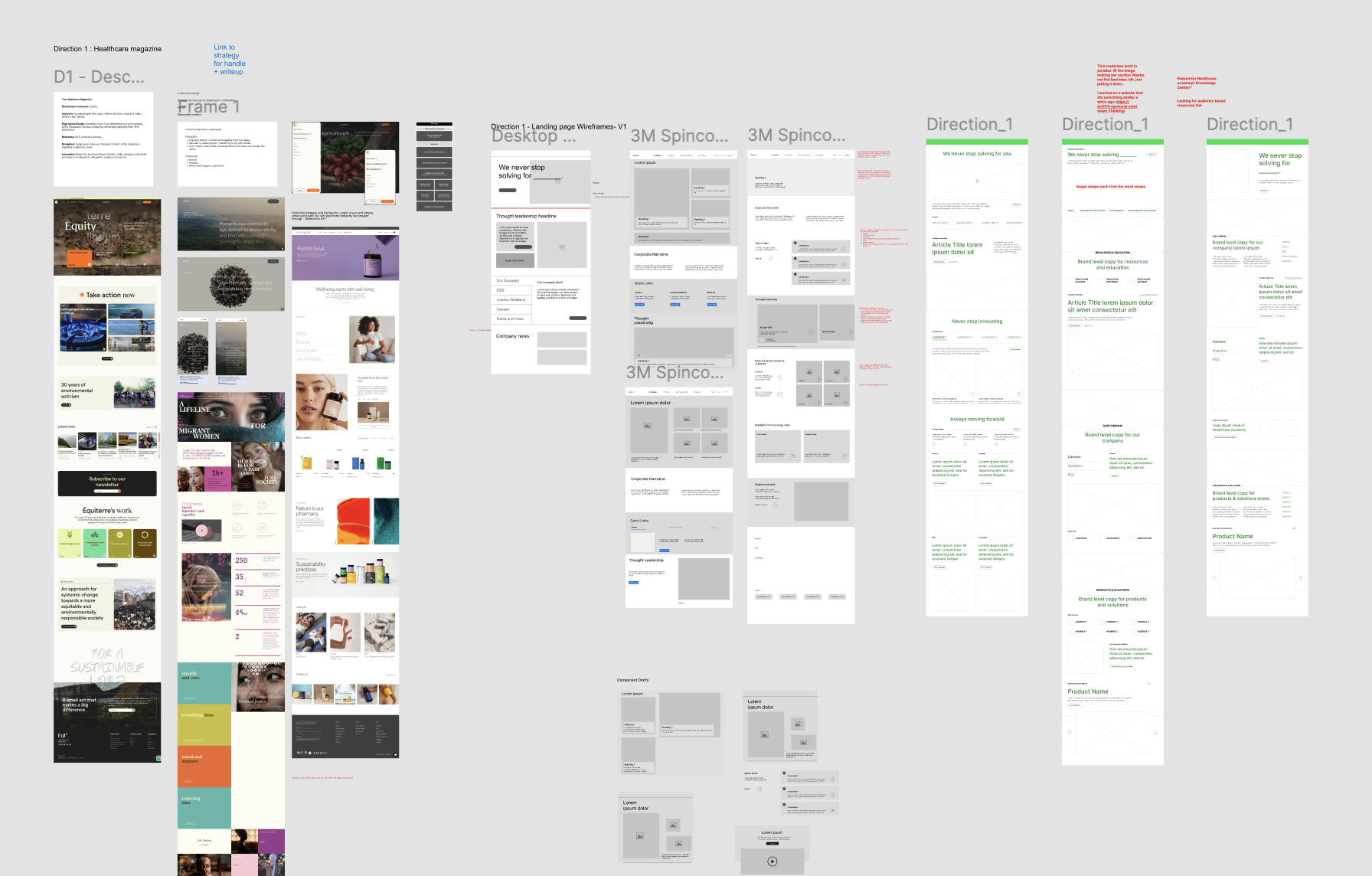
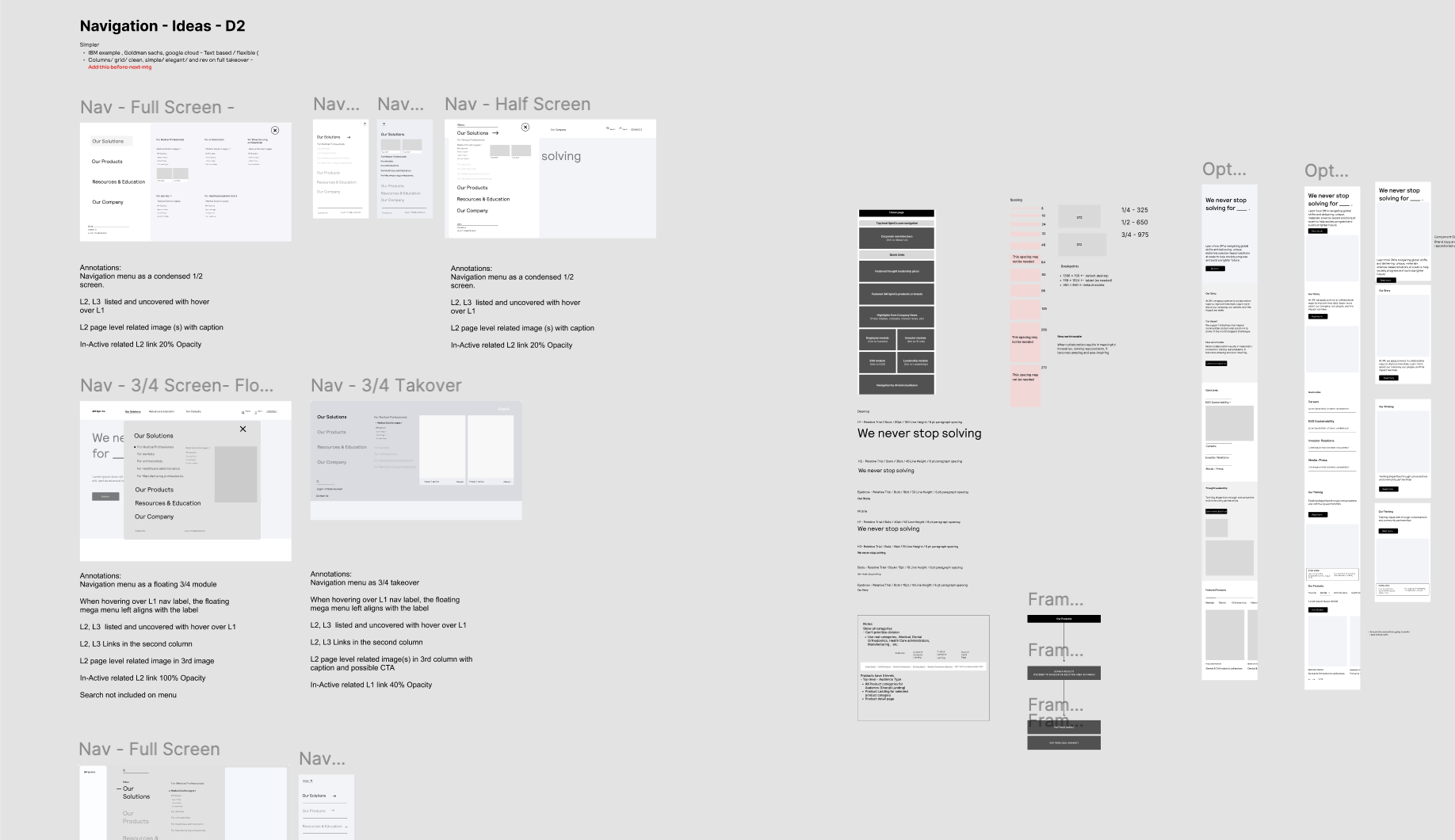
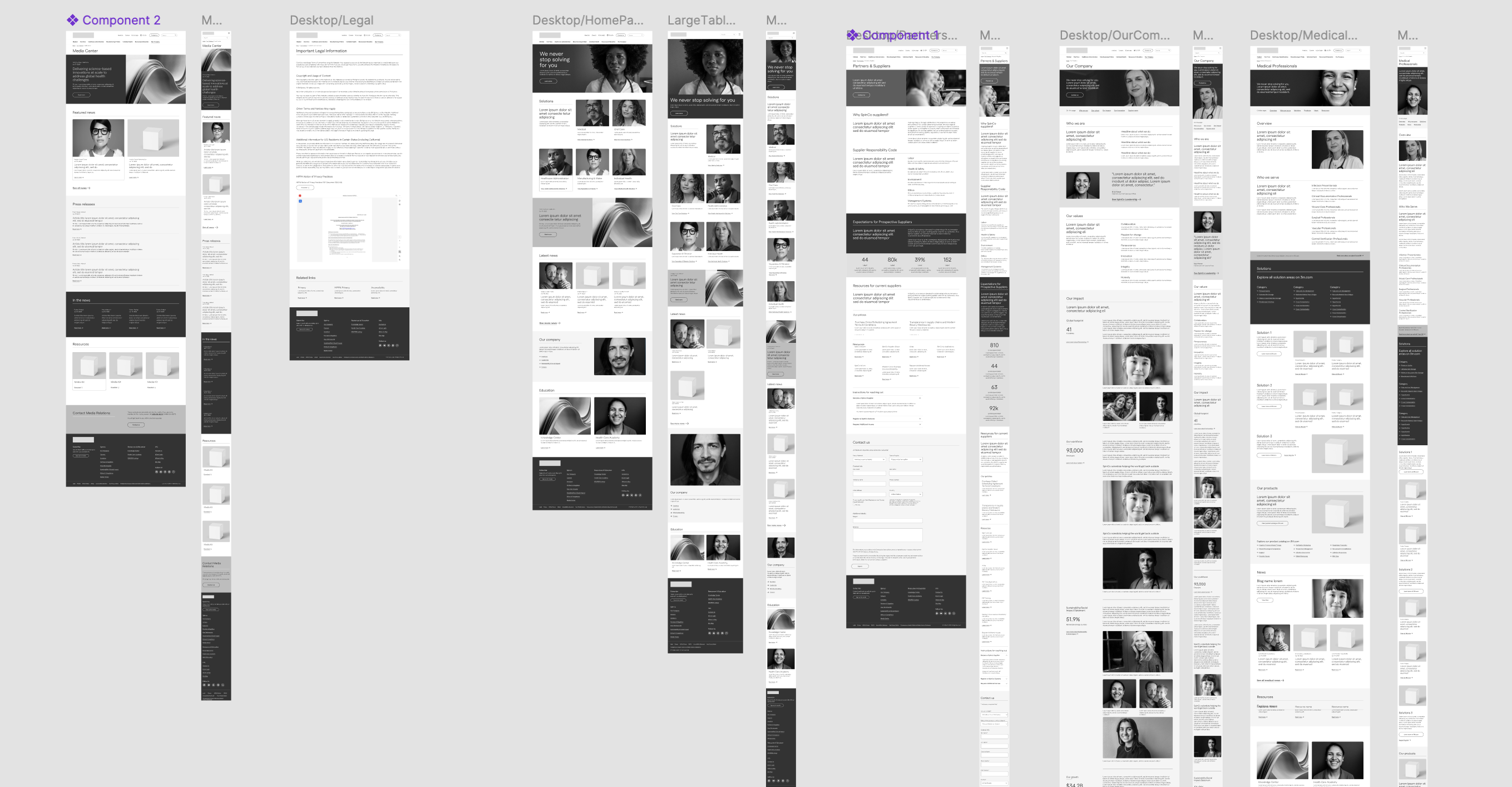
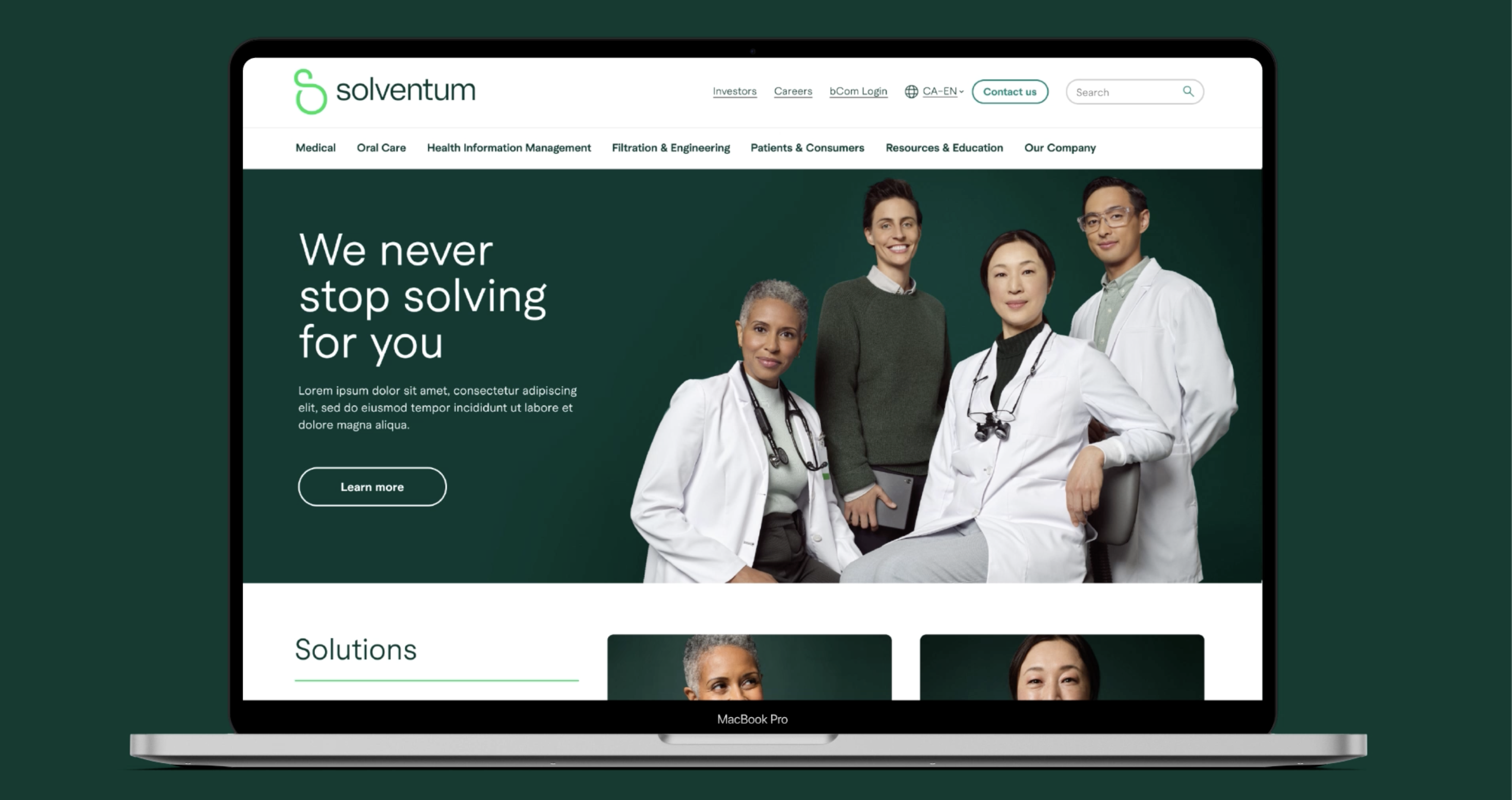
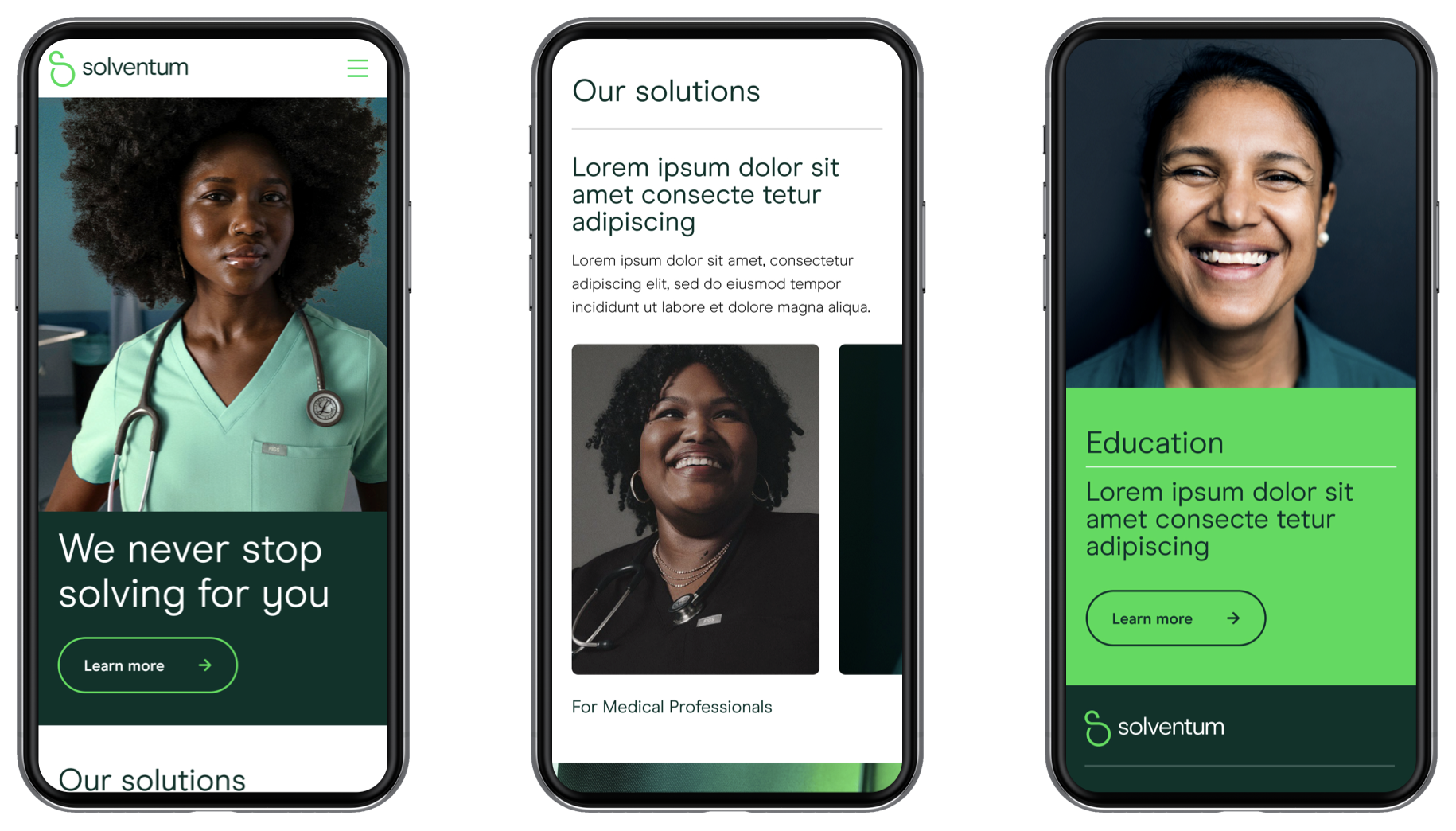
The design process moved through rough concept to refined component library. The images below show the progression: early block explorations before direction was locked, through to high-fidelity wires and final visual design.
The website was one output. The brand center was the system behind it.
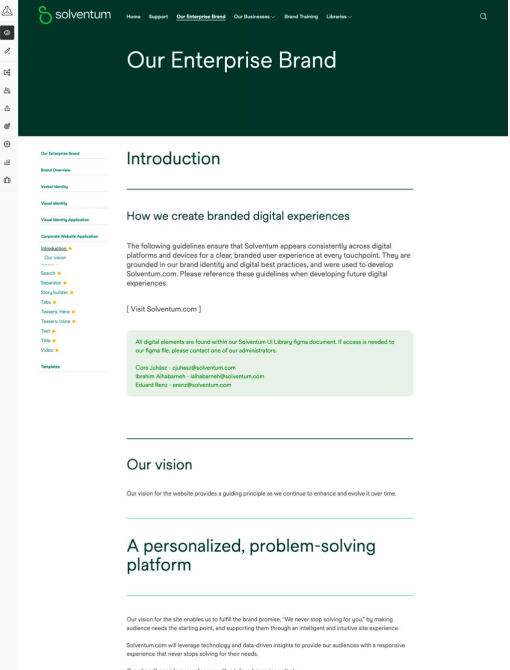
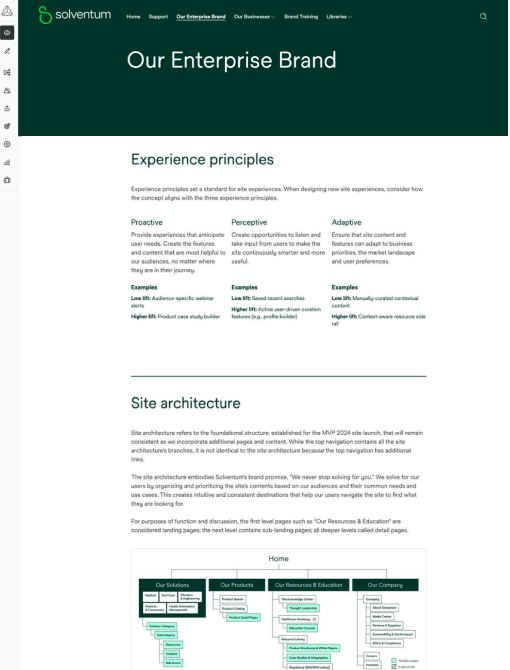
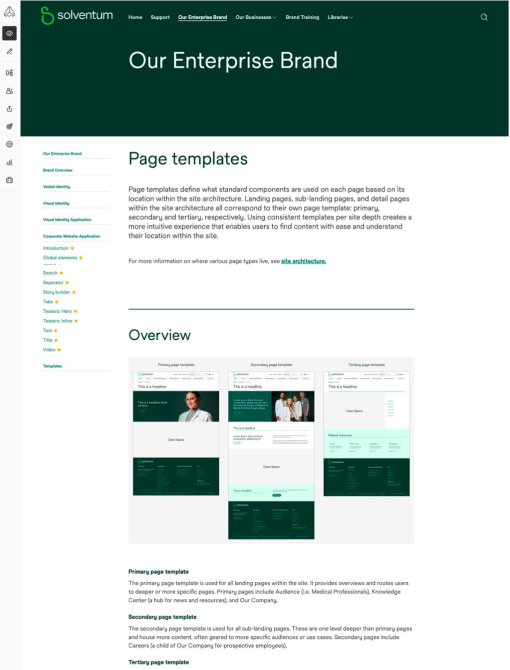
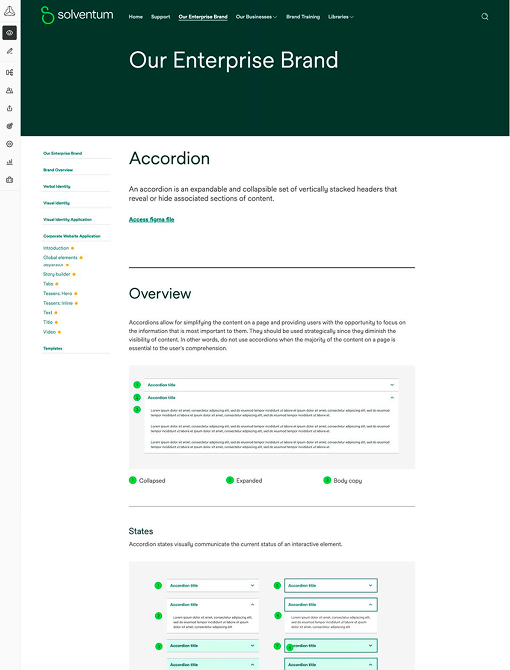
I led the development of Solventum’s brand center as an internal platform that housed everything my team and I had built: the strategic vision, experience principles, site architecture, and the digital component library, all structured so their in-house team could pick it up and run with it. It wasn’t documentation; it was a strategic north star for all future development.
After the public launch workstreams were underway, the client asked me to take on an additional phase focused on the internal brand experience, a direct result of the trust built during the earlier phases.
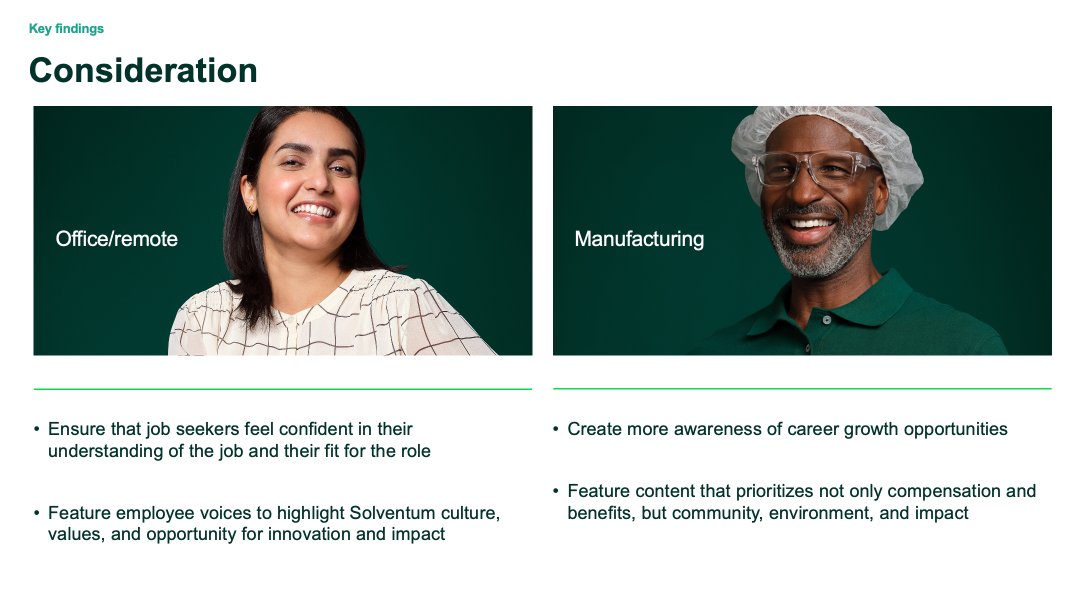
The employee brand work followed the same research-driven methodology. I conducted a new round of global employee interviews, developed a more detailed set of employee personas, and proposed activation concepts to help Solventum bring the brand to life internally during what was, for many employees, a long-awaited yet monumental transition.
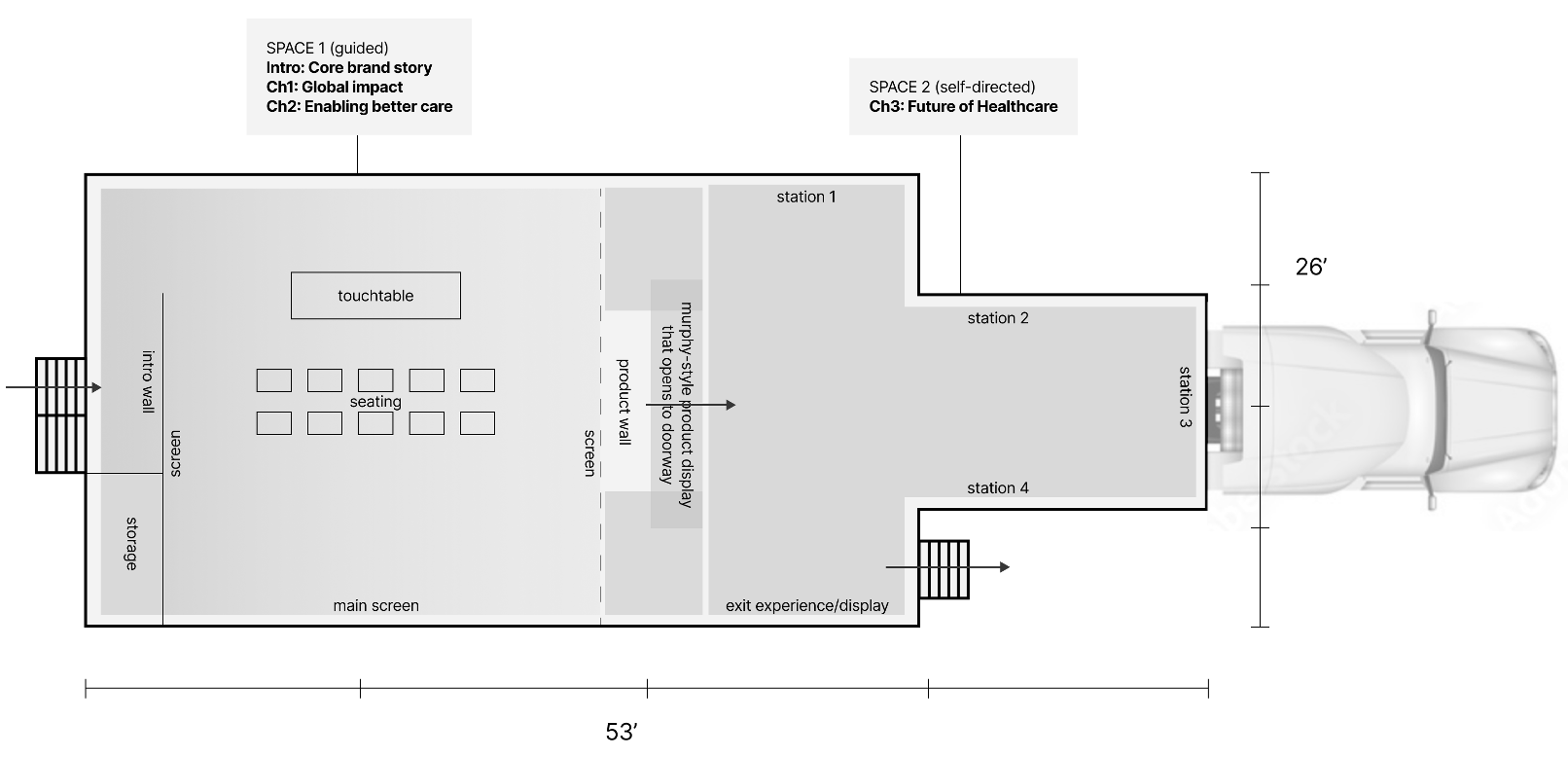
The research phase surfaced an insight that extended beyond digital: Solventum wouldn’t have their own physical spaces for one to two years after the spinoff. In that gap, they still needed a way to bring their story to investors, key customer segments, and the press.
I proposed a mobile innovation center: a trailer outfitted with digital screens that could flip content based on audience type and industry. My team and I designed the spatial flow, developed the content strategy for the interactive exhibitions, and created the concept for handoff to the client's implementation team.
This wasn’t a website problem. It was a brand experience problem that required thinking across channels, audiences, and physical constraints. The research made it possible to design for all three.
-
Launched across 38 countries.
Solventum went public on April 1, 2024, with a fully functional website at solventum.com across 38 countries, including localized language support.
-
25+ templates shipped.
Along with a full component library, all added to their Brand Center so that Solventum could easily grow and scale.
-
Research adopted internally.
The unique role-based persona framework developed during this engagement was adopted by the client’s internal teams and continues to inform their decision-making.
-
Strategy embedded for scale.
The creative strategy, experience principles, and phased site roadmap were published in the brand center as the north star for future development.
-
Engagement extended — twice.
The client expanded the scope to include the employee brand phase, a direct reflection of the value the earlier work delivered.